
Boozhoo, indinawemaaganidog! Aaniin! That is to say hello, all of my relatives! Welcome to another edition of An Irritable Métis. This edition is all about important anniversaries (to me anyway), and events both cool and landmark. It’s been more difficult to write than I thought it would on account of all the gigantic, unanticipated emotions revisiting it stirred up but at least, and thankfully for obvious reasons, I am getting it out on time!
Before we even get out of the gate, though, I want to remind you of this cool event that is happening in just five days: the latest PERCH event (a collaboration with Chickadee Community Services) featuring Kyle T. Mays, author of When We Are Kin: The History and Future of Afro-Indigenous Solidarity. This is our second PERCH conversation and you may get more information and register HERE. It’s going down Tuesday, August 25 at 6 pm Pacific/7 pm Mountain/8 pm Central/9 pm Eastern. That’s practically tomorrow!
As I mentioned before, you don’t have to pay to participate in PERCH events. We want you to join us! It’s probably the hugest part of the Venn diagram overlap between the Irritable Métis and Chickadee Community Services: an educational opportunity to introduce Indigenous writers and thinkers to people who may not have opportunity to encounter them otherwise. And I really do love the conversations.
And remember: if you want to attend and don’t want to donate, or are curious and want to attend before making any kind of financial commitment (suggested donation is $10-$30, mostly so we can pay the authors), just respond to this email and I’ll make sure you get the link to attend, no questions asked.
I hope some of you decide to sign up; this is a big deal to me personally, frankly. More than the usual stuff I’m relentlessly promoting about myself all the time. So, yeah. I’m grateful if you’d give IT some consideration.
And now, on to the rest of this newsletter….
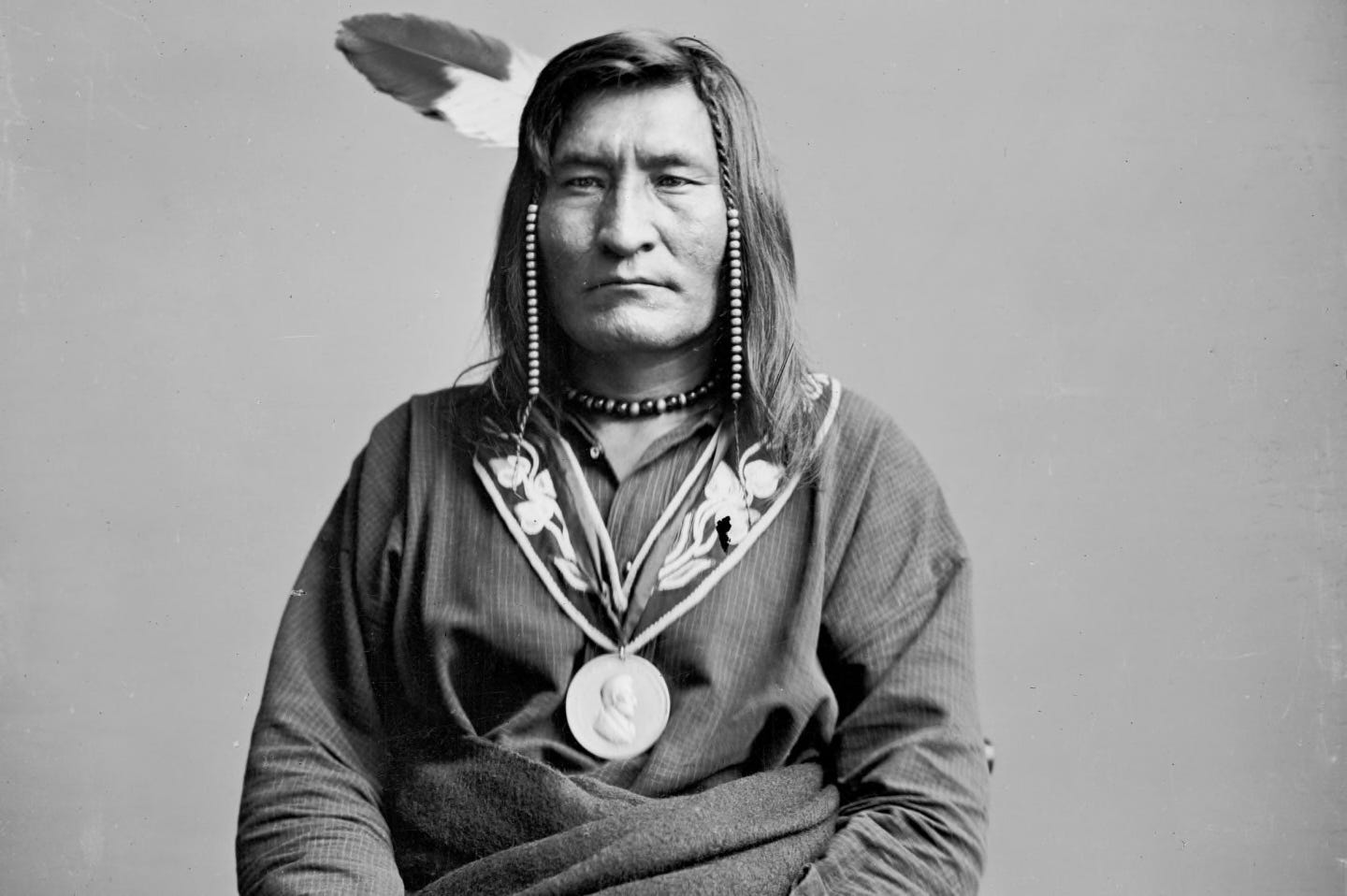
Today is the second anniversary of the official release of Becoming Little Shell, which came out on August 20, 2024. What a whirlwind of activity this event precipitated, and what a joy it’s been to have the opportunity to tell the story of our people literally all over the United States in pretty much every region, though there are plenty of places I didn’t get to and that bums me out a little if I allow it to. There remain not enough people who know about us and our story; in fact, the title of this newsletter comes from a blurb written about BLS from a bookseller at Arcadia Books in Spring Green, WI. I found it while perusing all the stuff that was going out in the world before the book’s release. I’ve never been to Arcadia Books nor Spring Green, that I recall.
I am grateful all over again for all the kindness displayed in these efforts to get this book out from so many people I’ve never met.
Things are slowing down a bit now after back-to-back summers of touring the book, first for its hardcover release and then the paperback, and it feels a little weird not to be doing that this year, or not to be in contact with the Milkweed folks or anyone else I was working closely with at this point for, really, three or four years straight. I’m still plenty busy, just a different kind of busy. I’m also standing at the dusty crossroads of “Okay, now what?”, which I want to write about, but some other time.
To everyone who has bought the book, come to events, shared it with your own people, and reached out to me (and I’m sorry I’ve been unable to respond to so many of you), I extend my deepest gratitude. Chi-miigwech, truly.
Tonight!
So I’ve mentioned the cool event referred to in this edition’s introduction, and the preceding was the “important anniversary” part; now it’s time for the Landmark Event. This evening I will be in Helena to celebrate the re-release of the late Nicholas Vrooman’s “The Whole Country was… ‘One Robe’”: The Little Shell Tribe’s America.
This is officially a HUGE DEAL.

This One Robe book is monumental. I believe its importance to the existence of the Little Shell people – and to our status as a sovereign nation – is immeasurable.
I also believe it is one of the most important books ever written related to the history of Montana and this region of Turtle Island.
That the book was reissued, and so beautifully in a gorgeous hardcover format, by the Montana Historical Society is a gift whose importance can’t be understated.
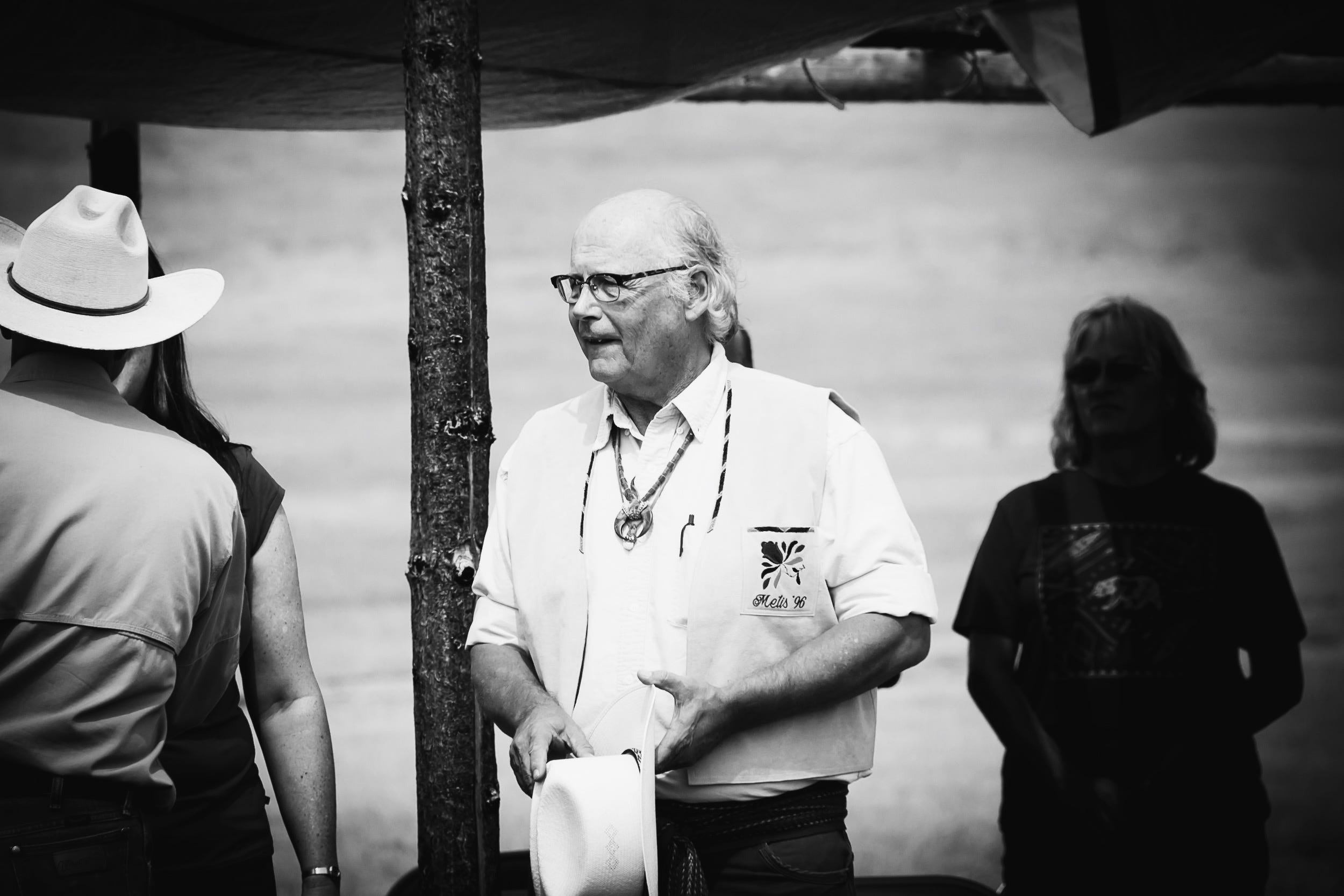
Becoming Little Shell would not exist without Vrooman’s One Robe. In fact I devoted an entire chapter to it, which I am celebrating by closing this newsletter with an excerpt from BLS of the entirety of that chapter. Nicholas told me on a couple occasions how instrumental Joseph Kinsey Howard’s Strange Empire, originally published in the 50s, was to him wanting to come out west in the first place. Then, when it was reissued in the 90s, he was invited to write a new introduction to it. Now, with One Robe, I was also invited to write a new introduction. The synchronicity of this is remarkable and important and I am verklempt thinking about it while looking at the following picture of Nicholas. Like many people, I miss him very much. I wish he’d survived to see the Little Shell receive our federal restoration. I wish he’d survived so I could have handed him my book, and thanked him personally. When I talk about how I’ve felt the hands of my ancestors guiding me, opening doors for me, his are among the mightiest of them.
I like to imagine his spirit is somewhere Out There, perhaps in the Sweetgrass Hills, waiting for me to join him.
Friends, with One Robe now available for order, you can get a copy HERE with my signature. It’s not an inexpensive book (still less than the upwards of $1000 people have had to pay for a copy online the last few years) but it’s huge and the new edition is magnificent. Nor is its importance as a historical record of the West hyperbole on my part. If you care about these things, get it now. The photographs alone are worth every penny.
And if you haven’t gotten a copy of Becoming Little Shell yet, please consider that as well. Too many books are long dead after being a mere two years on the market. Mine isn’t, and I don’t want it to either. You can get it everywhere, and via audio too, where you’ll get to hear my voice reading it. If you want a signed copy, even personalized, Fact & Fiction is the place.


Friends, I’m all teary-eyed now and I’m not ashamed to admit it. I remain magnificently grateful for your time and attention and support. This newsletter has returned to being my primary means of keeping things afloat, and your paid subscriptions – welcome and deeply appreciated but certainly not necessary for your participation here – are key to that. If you think this space is worthy of $5/month, or $50/year, please consider upgrading by hitting the button below:
Would you like to support my work but don’t want to subsidize the villains who run Substack? You may always do so via Buy Me a Coffee HERE. I am eternally grateful.
Now, on to the excerpt….
My committed journey to becoming Little Shell and making vigorous claim of my Indigenous identity begins on October 5, 2013. It’s day three of the fourteenth annual Montana Festival of the Book in Missoula, Montana. Sherman Alexie—at the time arguably the most famous Indian writer in the country—performed to a sold-out audience at the Wilma to kick off the festival a couple nights earlier. And scheduled at the Roxy Theater is the debut of the film adaptation of Blackfeet writer James Welch’s classic Winter in the Blood. Soaking up these events and the energy around them, Indians are much on my mind.
A presentation called “Overcoming a Western Legacy” is scheduled for two thirty at the Holiday Inn, the venue for most of the readings and panels. This presentation, in Ballroom D, leaps from the pages of the festival program and catches my eye; it will be presented by Nicholas Vrooman, a historian from Helena who’s at the festival in support of his new book, “The Whole Country was . . . ‘One Robe’”: The Little Shell Tribe’s America.
I’ve heard of the Little Shell, but my knowledge is shallow. There was a recent article about the tribe in a regional magazine called Montana Quarterly. The article is titled “Waiting for the Day.” Its subtitle—“Montana’s landless Little Shell Chippewa are emerging from 130 years of neglect and poverty, and they’re dreaming big—even if the US government continues to deny their existence”—is an eye-opener for me, and I read the article intently. I’ve come to recognize that that my family likely has roots with the tribe, but despite some interest, I haven’t explored the possibility much. For all my talk of wanting to know, I’ve felt strangely resistant to the pursuit. After all the years of wondering, what if it turns out my family isn’t Indian after all?
The name “La Tray” is all over the state. As I’ve said, my dad denies our relation to any of them, but the large turnout for my grandfather’s funeral more than a decade earlier suggests otherwise. I hear of other La Trays even around Missoula; during a short stint of apartment living when I first moved back to Missoula in 2005, I had a La Tray as a neighbor. Julia held down a desk at a temporary employment agency for a short time. La Trays crossed her radar as well; one even sent her documents related to the family. When Julia passed them on to me, I ignored them. At the time, with all my doubts and uncertainty, I guess I just wasn’t ready to know for sure. This time turns out to be different.
A book fair is set up in the spacious open area just down a flight of stairs from the Holiday Inn lobby. It’s a noisy hubbub of people in knots of conversation or browsing offerings from various regional literary magazines and publishers. Long white plastic folding tables are laden with books written by festival participants. Besides names like Alexie and Welch, there’s Andrew Sean Greer, Jamie Ford, Karen Joy Fowler, Claire Vaye Watkins, James Lee Burke, Robert Wrigley, and many others.
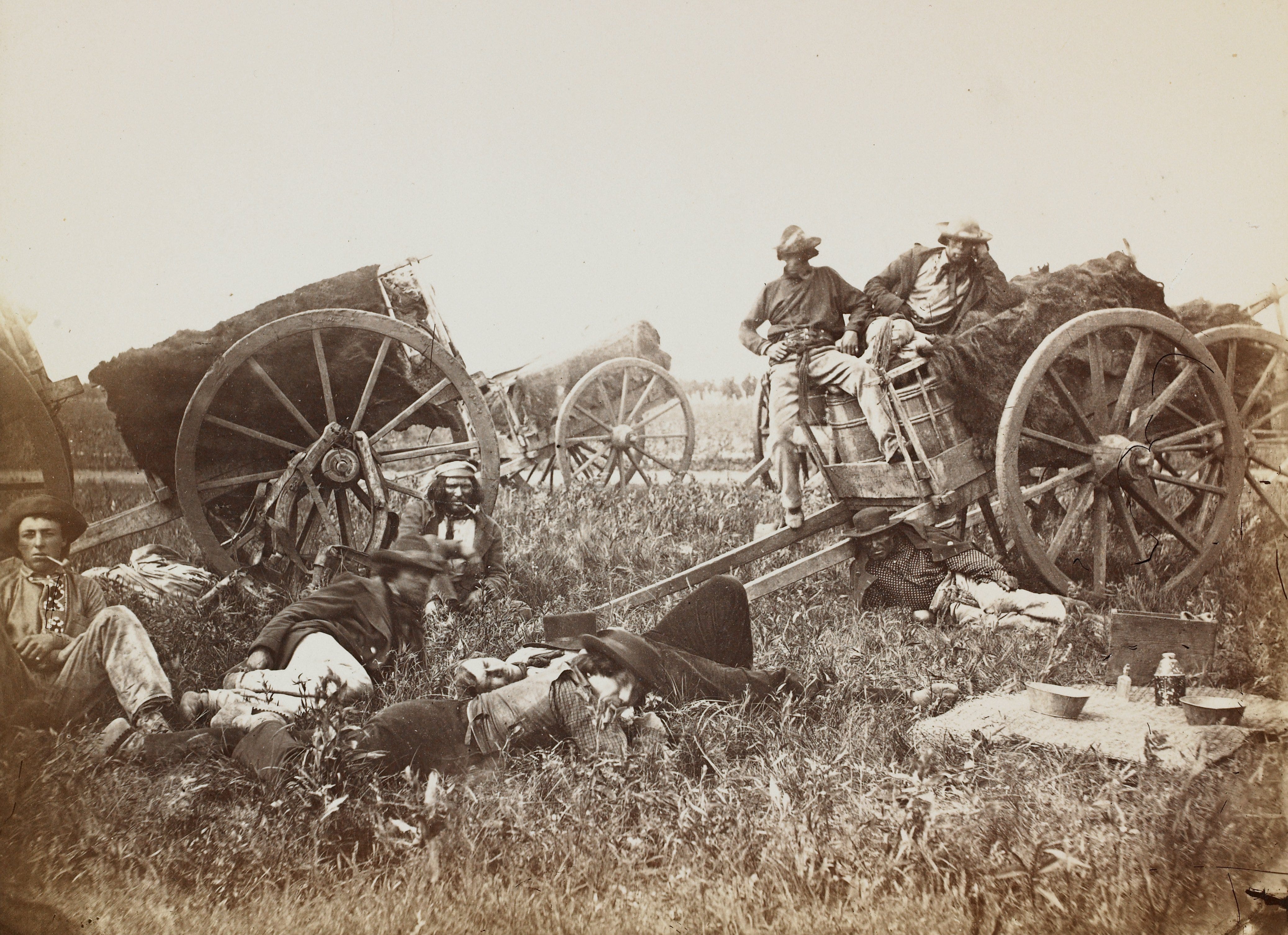
It takes some looking, but I find Vrooman’s book. It’s an oversized paperback, thick and heavy, like a university textbook. The cover is a reproduction of a painting by Paul Kane, an Irish-born Canadian who spent much of the mid-1800s depicting First Nations people of the Northwest whom he encountered in his travels. This painting, titled “Half Breed Encampment,” depicts Plains Métis of the Pembina River region, circa 1846. It shows an Indian woman beside a cooking fire, with rows of tipis extending into the distance behind her. Cattle and horses surround, and there are several two-wheeled wooden carts.
I pick the book up and flip through it with my thumb. Dense, small print fills the pages, as well as many grainy black-and-white photographs and color reproductions of paintings. I’m a little breathless. I turn to the index and quickly find a list of references to La Tray. There are eight. Next I look for Doney, my grandmother’s family name. There are twenty-three references. I can hardly contain myself. I buy the book. There’s no way I’m missing this session.
🦬
Ballroom D is a dull-hued and poorly lit conference room unrecognizable from its ilk in any other aging hotel anywhere in the country. There are long tables covered in white cloth, with glasses arranged around sweating decanters of water set at intervals on their surface. I’m one of maybe thirty people in the room. I find a spot near the back, pull out the metal folding chair tucked underneath, and sit down, alternating between bouncing my right knee and twiddling my thumbs. I feel an unexpected mix of excitement and anxiety.
Nicholas Vrooman is at the front of the room talking and laughing with a couple people in the last minutes before his presentation starts. He has a fringe of short gray hair around a mostly bald head. He wears glasses that can’t hide pale blue, mischievous eyes, and he smiles and laughs regularly through slightly jagged teeth. He’s a little taller than average, robust, and wears brown jeans, cowboy boots, and a pale button-down shirt, its long sleeves rolled just above his elbows and a ballpoint pen thrust into the breast pocket. Over the shirt he wears a cream vest embroidered at the edges of the lapels and left breast pocket in alternating bands of red, black, and turquoise. A flower—red with orange, black, and turquoise petals—is embroidered in the center of the pocket. In script below the flower are the words, “Metis ’96.”
“The foundational issue in the creation of the American nation,” Vrooman begins, “is the dispossession of Aboriginal peoples of the land, and the genocide that occurred in that creation. That ongoing event, that actually remains a current issue.”
I’m immediately captivated. No droning academic, Vrooman is an enthusiastic speaker. His voice, even without a microphone, booms loudly in the small conference room as he works through his presentation. There’s a firehose of information, and it comes so fast I can hardly keep up with my notetaking. Finally I give up, pour myself a glass of water, and just listen. There will be time to collect dates and names later. For now, I just want to absorb whatever I can.
Twenty minutes or so later, I feel like Nicholas Vrooman has altered the course of my life. I’ve learned more, and with greater certainty, about where I come from than I’ve known my entire life prior. His presentation concluded, several people approach Vrooman as he makes his way from the conference room, smiling and shaking hands. I sit, stunned, trying to absorb what I’ve just heard, feeling wave after wave of conflicting emotions. Elation. Fear. Excitement. Nervousness. As he approaches, I finally stand and move toward Vrooman. Face-to-face in the first of what will be many encounters, I tell him my name, how I’m now certain my family is tied to the Little Shell, and that I’ve been wanting to write about it but didn’t know where to start. This last bit, the writing about it, is possibly the first time I’ve admitted the desire aloud.
Nicholas Vrooman laughs and smiles, and says that with a name like La Tray, I’m definitely Little Shell. Then he signs my book: “For Chris. Track it down. It’s yours. All best, Nicholas Vrooman.”
🦬
When I first met Nicholas Vrooman, he asked where I was from. I said Frenchtown. Almost offhandedly, he told me that was a Red River resettlement zone too, like so many other communities around the state. It wasn’t until deeper into my research journey that it really settled on me what he actually meant. It’s part of why locating a copy of Frenchtown Valley Footprints was such a big deal to me. Frenchtown has been around a long time, longer than I realized.
Don’t just take it from me, though. Writing in the October 1867 edition of Harper’s New Monthly, in an article called “Rides Through Montana,” no less illustrious a person than Irish nationalist, American Civil War hero, and second territorial governor of Montana himself, Thomas Meagher, wrote of Frenchtown as “the oldest settlement in Montana, the first having been built there in 1857 by Mr. Moses Reeves.”
Though spirited, the statement isn’t true. Montana is a big place, and a busy one for at least a couple decades before Meagher got his ill-fated gig. (He would disappear under mysterious circumstances in Fort Benton less than a year later.) He did get the approximate date of its settlement correct, though. Historians like to argue, but one thing those who study the region can agree on is that Moses, or Moises, or Mose Reeves was one of the first settlers. Along with his father-in-law, Louis Brown, an older man named Baptiste Ducharme, and their families, Reeves settled the area somewhere between 1857 and 1859.
In Frenchtown Valley Footprints there’s a photograph of a list of Frenchtown inhabitants, per the September 14, 1860, census. Of the more than twenty people listed—mostly the combined families of Brown, Reeves, and Ducharme (listed here as Deseim due to the language difficulties, translation, and illiteracy common to the time and location)—only two are listed as being of “White” race: Louis Brown and Moses Reeves. One person—Brown’s wife, Emily—is listed as “Red.” All the rest are “HB,” or half-breed. Brown and Reeves are almost certainly “HB” men themselves, passing themselves off as white “French-Canadians.”
Claiming white ancestry if you could “pass” as white began early for Indigenous people and continues to this day. I have no record of my father ever identifying as anything but white. Now, with so many different shades of people marrying and having children and trying on and abandoning identities, it’s that much more difficult to “prove” Indigenous heritage for those of us trying to, especially in a nation with such a narrow idea of what a Native person should look like. My dad never wanted to be viewed as Indian. I’m the opposite.
🦬
Vrooman’s book exists because in 2010, the Montana legislature allocated funds to each of the state’s tribes to produce a written history. The Little Shell, whom the state of Montana recognized in 2006, under then-Chairman John Sinclair asked Vrooman if he would write their book. Vrooman, who was already doing work on the Little Shell’s behalf to support their pursuit of federal recognition, was happy to oblige. The result of that request is the magnificent “The Whole Country was . . . ‘One Robe’”: The Little Shell Tribe’s America. I know this because Vrooman told us as much during that fateful 2013 presentation. The creation of this book is a key element in the inevitable securing of recognition for the Little Shell. Today, as I write in 2022, the book is long out of print and sells for upward of $1,000 online.
The vast majority of what I know about the Little Shell I owe to Nicholas Vrooman. I’ve picked up more bits and pieces in talking to other tribal members, visiting with other historians and scholars—armchair and professional—and reading books, but I stand on Vrooman’s shoulders when I share what I know.
My initiation in the history of the Little Shell begins at the 2013 Holiday Inn event. Vrooman describes how various treaties and interactions with the United States government led to the creation of the “Landless Indians” of Montana. But we’re talking about negotiations like those initiated by appointed Washington Territory governor Andrew Stevens, whose journey west in 1853 paved the way for the railroad expansion. How settler colonialism forced Indigenous people to scatter across the high plains all the way to the northern Rocky Mountain Front and beyond in an effort to preserve a culture connected to dwindling bison herds. And finally the unconscionable Cree Deportation Act of 1896, where the United States tried to capitalize on calling any Indians not on American reservations “Canadian refugees” from the North-West Rebellion that exploded in Saskatchewan in 1885.
This is all history most of us have never heard before, and I sit with my notebook open in front of me, the pen forgotten. Every time the word “Chippewa” booms from Vrooman’s mouth, a little charge goes off in my chest. These are the Chippewa people my grandma spoke of. My family. All those references in the index of One Robe. Elements of an “Indian problem” the US government attempted to solve through genocide.
The effort failed, but not without ramifications, namely a few thousand homeless and starving Indians nobody knew what to do with. The creation in 1916 of the Rocky Boy reservation of Chippewa-Cree people in north-central Montana was supposed to address the situation, but even that wasn’t enough. There were too many people who had been pushed off their traditional homelands and not enough land the United States was willing to return to them. Essentially, all the people left out when Rocky Boy was established are the Little Shell Tribe of Chippewa Indians today.
I’ve been to Rocky Boy’s reservation on a couple occasions. It’s beautiful, with broad rolling hills drained by creeks out of canyons nestled into the Bear Paw Mountains. If you pass the most accessible reservation entrance at the town of Box Elder just off Highway 87 headed north toward Havre, you have no idea what natural glories lie tucked away in the interior. I wish everyone who needed to fit there over a hundred years ago. How might my life had played out differently if we had? If I’d been born into that tribe? If my father and his father had? Who can say?
The Little Shell are related to all the displaced people who ultimately found homes at Rocky Boy and on other reservations, a group of people who are directly related to the integrated history of the northern plains, but through a cross between miscommunication, misunderstanding, negligence—and not enough money—were left out of settling. As “landless” Indians living on the fringes, they became like houseless people in modern America. They were on the margins of society, buffeted by events largely beyond their control, and ultimately forgotten and ignored.
This “integrated history” plays out literally today, particularly in family names. You’ll find names like Doney, Azure, and LaFromboise enrolled on just about every tribal roll in the state. Others too. Even before getting left out at Rocky Boy, our people made homes and new relationships on other Montana reservations. I haven’t encountered any La Trays enrolled with other tribes yet, but that doesn’t mean there aren’t any.
While the Little Shell—a formal name in use only since 1978, when the federal government finally established a path for unrecognized tribes to gain federal recognition—refer to themselves as “Chippewa” Indians, it’s almost a misnomer. Chippewa is generally understood to be an alternate pronunciation of “Ojibwe” that resulted from European tongues mangling the word. But it’s used interchangeably now by Indians and settlers alike to refer to a segment of the Anishinaabe people of North America. Consider the Anishinaabe as a vast umbrella sheltering a number of different individual tribes related by culture and language; besides the Ojibwe, other Anishinaabe tribes include the Potawatomi, Odawa, Nipissing, Mississaugas, and Algonquin people. In Canada, the Anishinaabe are the second-largest population among the First Nations people, while in the United States, they comprise the fifth.
The makeup of the Little Shell Tribe is much more complex than the name might suggest. Chippewa is a good place to start when identifying the people, but the tribe is really a polyethnic amalgamation of what occurred culturally on the northern plains over three centuries, beginning with the seventeenth.
Westward expansion by European settlers backed by colonial institutions put enormous pressure on Indian survival. In response, Indians, as Vrooman described, “relocated, dislocated, intermarried, allied, and became new peoples.” This intermingling included not just other native tribes, but the first wave of French explorers and fur traders, some Scots and Welsh among them, who pushed west of the Great Lakes region in the 1730s. Marriages happened, children happened, and generations of intermarriage among those children happened. Over time an entire mixed-race culture and ethnicity developed across Western Canada and the northern plains of what would become the United States. The resulting people became known as the Métis, from a French word for a person of mixed ancestry. The Métis were explorers themselves, working in the fur trapping and trading industry. Some took up farming and raised cattle, while others still followed the buffalo herds. By the 1850s, the Métis were a fully developed Indigenous society, with towns featuring a mix of established buildings and shops side by side with lodges and tents; townsfolk living shoulder to shoulder with relatives who preferred to live more traditionally.
Over the last half of the nineteenth century, the Métis people tried and tried to establish themselves, only to be attacked, forced out, or otherwise displaced until there was nowhere else to go. This is a lost history few know. It’s a history of my people. And whatever my father knew of it—and some of it he had to—he didn’t share.
Thank you for sharing all this history. And for the stars aligning to bring you and Nicholas Vroom together. Wow!
So proud of you, Chris. Wishing you many rich moments in the now-what ness of this threshold 🦬 🌟 🕸️